Tuesday, May 21, 2013

Covering Distance

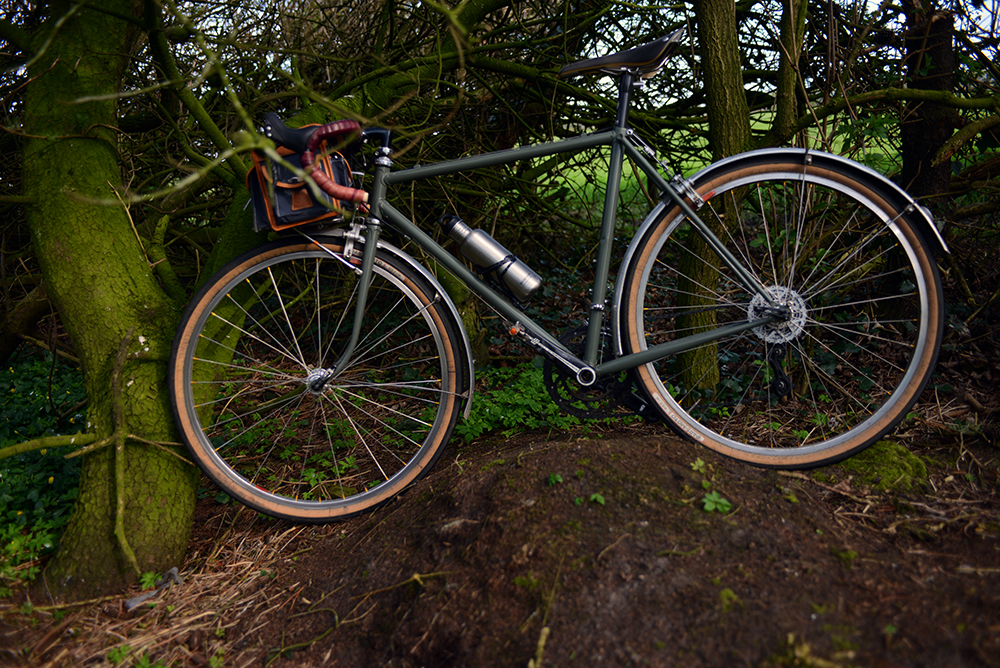
Last week I did two 100 mile rides several days apart. The first I rode on my own bike, with my camera, stopping along the way. That was really nice. The second I did on an unfamiliar demo bike, riding the course straight through except for a lunch stop. That was really nice too. The rides didn't take all day and they didn't wipe me out, allowing me to work before and after. Had time been no object, I felt as if I could have kept going.

To me, it is this private moment of realisation that "I have it in me" to do this kind of distance, casually - that feels like an accomplishment. More so than, say, an official brevet finish. It is not that I don't value organised events and their objective measures of performance. It's more that when doing an event, I already know that I can do it; I would not attempt it otherwise with all the logistics involved. In that sense, it feels not unlike taking a test based on material I've already learned. It's the learning itself that's thrilling. That "A-ha!" moment. Doing well on the test? It's nice, and often necessary. But it's not the same as the learning itself.

Maybe this line of thinking just means that I am hopelessly non-competitive. Or maybe it is simply not a good analogy. In fact almost certainly not. But there's a grain of something in it, somewhere.

Covering new distance, covering new material. And along the way that feeling of having truly grasped, understood, internalised something new - something that had previously seemed unattainable.

Monday, May 20, 2013

Paul Carson Step-Through Bicycle

Paul Carson Step-Through
As I stood composing this shot, a woman passing by with grocery bags stopped beside me. Looking at the bicycle, she tilted her head to the side and smiled. "That bike!" she said, "It looks like... happiness." It was a funny outburst, no doubt inspired more by the sunny day and the quaint tree-lined street, than by the bicycle itself. But I knew what she meant. Because this particular bike fit into the idyllic backdrop perfectly. Simple, friendly and inviting, it looked like no more and no less than what it was - a yellow bicycle on a beautiful summer morning. Maybe Paul is onto something here, I thought.

Paul Carson, Artisan's Asylum
Even though Paul Carson makes bikes and teaches others how to, I do not really think of him as a framebuilder. He is more of an engineer, an experimenter, a problem-solver. Paul doesn't see what he does as a craft, but as production that he loves to simplify and optimise. You might not find him polishing frame joints for hours on end. But you will find him making ridable prototypes with speed and ingenuity ...as well as the tools, fixtures and parts to facilitate doing so. In a sense, Paul is like a magic genie who can turn wishful thinking into reality, and fast. On one occasion, I watched him make a rear rack in under 20 minutes, so that he could try out a pannier on his roadbike. Another time, I wondered how difficult it would be to make a double-plated fork crown from scratch. He asked me to elaborate. I explained and showed pictures. He thought about it, then ducked into a corner. Hack-hack-hack. File-file-file. Flames! Flames! "Like this?" 

Paul Carson Step-Through
And there it was - double-plated fork crown for oval blades, spaced for a wide tire, just as I described. "Glad you like it," he shrugged. "I'll get a batch of these machined." That's Paul Carson, in a nutshell.

Paul Carson Step-Through
Unlike most other local builders, Paul is not part of the racing scene. He isn't even really part of the local bike scene so much; he is just his own entity. Perhaps that is why he gravitates toward making city bikes. City bikes have an immediate and obvious utility. And it is fun to see them cruising around the neighbourhood, ridden by ordinary people, carrying milk and potted plants. Over the past months, we've been discussing some ideas for step-through designs. We both like the feel of old English 3-speeds and we also like low trail. Wouldn't it be great to combine these? While our ideas diverge when it comes to wheel size and exact geometry specs, overall Paul's idea of a great step-through is not dissimilar to mine. When he asked me to try his prototype, I was eager to give it a go. 

Paul Carson Step-Through
Made of touring grade cro-moly tubing, the Paul Carson Step-Through is designed around 700C wheels with up to 35mm tires and fenders. It has a gently curved top tube, and is proportioned so that the handlebars can sit at or just above saddle height. 72° head tube angle and 73° seat tube angle. Trail in the mid-40s.

These framesets will be made to order in a range of sizes and with a menu of options, with prices starting at $650 for a TIG-welded frameset with standard (lugged) fork crown, made for caliper brakes. The price includes powdercoat in a range of standard colours and a headset. Extras include the option of fillet-brazed construction, handmade double-plated fork crown, handmade stem, and cantilever/ v-brake bosses. Turn around is 4 weeks.

Paul Carson Step-Through
Paul designed this frame with versatility of build in mind. Semi-horizontal dropouts make it possible to use either derailleur or hub gearing. The bottom bracket height (300mm with 28mm tires) is sufficient to set up the bike as a fixed gear. Braze-ons include eyelets for racks and fenders. 440mm chainstays are long enough to carry panniers without heel strike. And the front-end geometry will handle a front load.

Paul Carson Step-Through
The demo bike I tried was built in size 55cm and with all the extra options. Fillet-brazed joints, smoothly finished, but not fussed over. 

Paul Carson Step-Through
Canti-lever bosses and cable hanger. Twin plate fork crown.

Paul Carson Step-Through
And fillet-brazed stem (threadless).

Paul Carson Step-Through
Paul set this bike up with 28mm tires and fenders, a single speed drivetrain,

Paul Carson Step-Through
swept-back handlebars with cork grips,

Paul Carson Step-Through
and a Brooks Flyer saddle.

Paul Carson Step-Through
Leaving my own bike at the Asylum, I rode the Step-Through around town in the course of the morning, simulating some of my regular routes. When I struggle for something to say about a bike's handling, that generally strikes me as a good thing - as it means nothing is "wrong" with it. Paul's bike felt familiar, natural, normal. It also felt casual and accessible, more like a cool, repainted vintage bike than a new handmade bike. And it really did look oddly at home in our neighbourhood.

The fit worked well for me, with a more aggressive posture than a fully upright bike. There was no toe overlap with the size 55cm frame and 28mm tires with fenders, though it was close. The steering felt responsive and intuitive. My own city bikes are low trail (under 30mm) and this bike handled like a more neutral version of them.

Paul Carson Step-Through
As far as nit-picks, the step-over height could be a bit lower for my taste. And in my view, a practical city bike (especially for a pothole-ridden neighbourhood like ours) would ideally be specced with 35mm wide tires minimum, not maximum. This is where a smaller wheel size might be worth considering, especially if toe clearance is a priority. Personally, I also prefer lower bottom brackets. But I know that some riders like to feel as if they are "sitting high in traffic" on their bike, which the higher bottom bracket accomplishes. Otherwise, not much else to criticise; I liked the bike.

Paul Carson Step-Through
Paul Carson is an exciting person to know. He has ideas about streamlining the framebuilding process to make handmade bikes more accessible, and I will be following his work with interest. Made in this vein, the Carson Step-Through is not meant to be an artisanal show-stopper. It is a cute, friendly, ridable bike, with a friendly price, handmade in Somerville MA. 

Saturday, May 18, 2013

Speaking of Saddles

Saddle Fit at Cycle Loft
Earlier this week I was visiting Cycle Loft - a local bicycle shop known, among other things, for its extensive fit studio. I will be test riding a few of their bikes this summer, and the staff suggested I undergo a fitting session beforehand. As we were getting started, the fitter - Joel - caught sight of the Selle Anatomica I was riding. He asked whether I wanted to use my own saddle, given how particular it was, or try something new.

Today there are lots of high quality, well thought-out saddle designs on the market, in a variety of materials. The trick is to find one that fits our particular anatomy, position and riding style. For the past two years I've been going back and forth between a Berthoud touring saddle and a Selle Anatomica on my roadbikes. These saddles are as close as I've been able to get to being truly comfortable over long distances. But neither is perfect. So I decided to keep an open mind and see what the fitter recommended.

Saddle Fit at Cycle Loft
To start with, Joel measured my sit bones. This is something I've never had done "professionally" before, so it was pretty exciting. Cycle Loft uses the Specialized "Body Fit" method, which, as I understand it, is comparatively un-intrusive (no pelvic fondling, etc.). But there is a nifty device involved. A stool was brought out with a butt-shaped pillow, upon which I sat as instructed. When I stood up, my sit bones left two clear indentations, which Joel swiftly measured.

Saddle Fit at Cycle Loft
The figure was 135mm - considerably narrower than what I thought my sit bone width was based on my DIY measurements (the figure I'd come up with was more like 150mm). But we repeated the process just to make sure and got the same number again - so looks like 135mm it is.

Joel explained that a saddle should be wider than the sit bone width itself. How much wider depends partly on the rider's position and partly on the saddle's shape. As far as the rider's position, the more leaned forward you are, the narrower area of support is needed. That much I'd known. As far as saddle shape, Joel showed me a selection or road/racing saddles and pointed out that on some the sitting surface was flat across, while on others it was rounded, like an arc. For all my careful scrutiny of saddle shapes, this was not a distinction I'd explicitly been aware of before, so I was excited to learn something new. For any given rider, on a rounded saddle the width needs to be greater than on a flat saddle.

According to the fit chart, the saddle width recommended for my sit bones was 155mm minimum. My Berthoud saddle (which is flat) measures 160mm across, and my Selle Anatomica (which is rounded) measures 170mm across. My comfort with both makes sense according to this fit method.

Saddle Fit at Cycle Loft
Next, Joel asked what I liked and disliked about the saddles I normally use. I explained that my saddles are fairly wide across the rear, yet have narrow, racing-style noses. The wide rear and narrow nose combination works for me, because this way my butt feels fully supported but I don't get thigh-rub. Other saddles I've tried tend to be either too narrow or too wide all around, which doesn't work. I also like the feel of suspended leather, compared to other surfaces I've tried.

As far as what I don't like, that is a little trickier to explain. The Berthoud feels a bit too hard, whereas the Selle Anatomica has a bit too much give. And with each, I occasionally - at random times, it seems - feel pressure or pinching in the middle of my "soft tissue." It happens rarely now compared to the problems I used to have, but it does still happen occasionally. We discussed all this in detail, as well as the other saddles I've tried. I described my dislike of gel (I sink into it and feel horrible pressure), my inability to ride Terry saddles (the slots are somehow in the wrong place), and finding the edges of many racing saddles "too sharp" as I pedal.

Saddle Fit at Cycle Loft
After taking all of this in, Joel suggested I try the Romin Evo saddle by Specialized (interesting write-up about it here). It had everything I seemed to need: a rounded wide rear (168mm across), a narrow nose, and a firm, but not rock-hard, surface. A channel down the middle and a curved nose were designed to avoid contact with exactly the pressure-prone spots I'd identified. It is not a woman-specific saddle, but then neither are my own. A synthetic saddle made by a big-name manufacturer, it was not what I would normally gravitate toward, but I'd said I would be open minded, and so I would.

The Romin Evo is now fitted on the demo bike I'm riding. I could not feel it under me on the initial 30 mile ride, but I will withhold judgment until after the follow-up, 100K ride.

But whether this particular saddle wins me over is beside the point. What I appreciated the most was the generally informative conversation with the fitter - who I felt was neutral and knowledgeable when it came to various styles, materials, aesthetics and brands of saddles. I would like to keep learning myself, and at some point to post a comprehensive guide that might be of help to those at a loss for where to start.

Friday, May 17, 2013

Breaking Away

Fruitlands, Harvard MA
A luckless morning. I had attempted to join a 100K club ride, only to get an important phone call as I pulled up to the start. By the time I got done the others were nearly an hour ahead. I would never catch up. I decided to ride the route anyway. 

The weather had been beautiful. But as I set off, it began to rain - cold, hard little drops, carried sideways by the wind, sharp against my face. 

On the road there was more traffic than usual. A mile in, a driver cut me off and I barely avoided a collision. Still fuming over this, I began to notice that my throat hurt. I was hot and cold. I felt sluggish. Maybe I was running a fever. Maybe I should count my losses.

A deep irritation over a day wasted was building up. Workdays that have no clear end or beginning. A weak constitution that has derailed my plans one time too many. If it's not one thing, it's another. 

Nagog Hill Farm
For some miles, it was angry riding. Riding a wave of frustration. But I pedaled. Mechanical motions. Round and round. Rain and chills, traffic, scratchy throat, round and round. "Oh shut up," my legs said to my throat. We would break away. 

I had the sense that once I was a certain number of miles out, it would all resolve itself, because turning back would no longer make sense. Concord, West Concord, Maynard. I pedaled harder.

But then came a moment of doubt. I had not meant to be on my own with my thoughts on this day. What would I do out there, for hours, with all these thoughts? "Oh shut up" my legs said to my brain. 

And we broke away. 

Steele Farm, Boxborough MA
20 miles in. As if someone had waved a magic wand, the cars were gone. The sun came out. The pedals lost their resistance. We floated up hills. My mind emptied. 

In Still River I passed a Benedictine monastery. It stands on top of a hill, overlooking a green and blue rolling landscape. Slowly I rode through it, not seeing a single person on its grounds. The monks must have been indoors.

In Boxborough I stopped at a farm. It had visitor hours and notices posted, but looked abandoned. With my bike, I stood in the middle of a field dotted with white barns, thinking of nothing. I heard ringing in the air. The field was full of dandelions. 

Fruitlands, Harvard MA
The climb leading up to the Fruitlands was shorter and tamer than I remembered. Today, the hill was an invisible host, gently taking me by the arm and leading me to the view. 

At the hilltop, I had the place to myself. No cars were parked at the scenic overview along the side of the road. No cyclists passed. I had made it all alone up there and the world felt far, far away. The sun flickered through thick clouds, a flood of light going on and off. I looked down at the little mountain clusters across the state line. The entire world felt close.

Harvard General Store
Descending into town, I remembered that I had not eaten for hours and stopped at the general store. When I ordered coffee and a sandwich, it felt strange to talk - as if I hadn't spoken out loud in years. Was I even saying the right words? The boy behind the counter had an inscrutably friendly face that had seen many cyclists. 

Nagog Hill Farm
Orchards and orchards on the return leg. The apple orchards have such neat rows of such crooked, erratic-looking trees. Line-dancing trees. Shaker trees.

This ride was coming to an end much too fast, I thought. I wasn't ready. And I veered off course onto another road, with more uphill floating, more orchards.

But at length, unfamiliar farms gave way to familiar ones, a gentle reminder of being homeward bound. Then finally, the bikepath, and the city - with 100 miles on the computer and frustration a faint memory. 

Sometimes if you just keep pedaling, everything else breaks away, falls away. If you keep pedaling, the mind quiets down. 

Wednesday, May 15, 2013

One Way Tikit: a Bike Friday Folder

Bike Friday Tikit
For some time now I've been curious to try a Bike Friday folding bike. They are pretty unusual around these parts, so an opportunity never presented itself. Imagine my delight upon discovering that someone I knew owned one. Hidden deep in her bike cave, this single speed Tikit stood mostly unridden since the owner, Pamela, stopped commuting to a downtown office. But hearing of my interest she dusted off the machine, and soon I was over to examine the rare specimen. 

Bike Friday Tikit
Made by the family-owned Green Gear Cycling in Eugene, Oregon, Bike Friday folding bikes have been handbuilt in the USA since the early 1990s. The range of models includes road, touring, mountain, commuter and tandem folding bikes - and all are highly customisable. Most of the models are designed around 20" wheels, with the fold optimised for packing the bike into a suitcase. However, the Tikit commuter models are made more compact with 16" wheels, and are designed to fold quickly for multi-modal transportation.

Bike Friday Tikit
Welded in steel, frame and fork, there are 9 Tikit models in all, offering different drivetrain and handlebar setup options. The One Way Tikit is the single speed/ fixed gear version. 

Bike Friday Tikit
It is set up with a flip-flop hub, 

Bike Friday Tikit
v-brakes, fenders, built-in chainguard,

Bike Friday Tikit
straight handlebars, 

Bike Friday Tikit
a handy carry handle (could be a bottle cage here instead),

Bike Friday Tikit
and a low-rider style front rack.

Bike Friday Tikit
Being a fan of generator lighting, Pamela had set up the bike with a dynamo hub wheel (unattached here, as it had recently been loaned out).

Bike Friday Tikit
A bike bag also comes with the Tikit, which can be stowed away into a tiny packet when not in use.

Bike Friday Tikit
Unlike most other folding bikes, Bike Fridays are available in different sizes. I am unsure what size this Tikit translates to, but its virtual top tube measures an inch or so shorter than the Brompton's (which is approximately 59cm). The seat tube is quite tall, with the saddle barely low enough to accommodate myself and the bike's owner (we are both just over 5'6"). However, as I understand it, the seat tube is modular and can be cut down or replaced with a shorter one.

Bike Friday Tikit
Bike Friday Tikits have had a couple of modifications over the past few years. The area over the bottom bracket is now made stiffer, with older models retrofitted with a stiffener bar. They have also recently made a beefier stem for the Tiket, the older one having been recalled (the bike pictured here has the new stem). 

Bike Friday Tikit
The fold is fairly quick, "less than 9-12 seconds after loosening one twist-locking fastener," according to Bike Friday.

Bike Friday Tikit
It is Bromptonesque in sequence, except for the seat tube - which gets folded over, rather than slid down.

Bike Friday Tikit
Notably, the front pannier can be kept on the low-rider rack as the bike is being folded.

Bike Friday Tikit
The folded bike can be rolled along, using the wheels themselves, with the bag still attached.

Bike Friday Tikit
It can also be carried by the handle - though Pamela notes that carrying the bike gets heavy and uncomfortable quickly, particularly when stairs are involved. Picking up the single speed Tikit, it did feel slightly heavier than an all-steel Brompton similarly equipped. And the fold is not as compact. However, the carry handle is quite comfortable compared to how a Brompton must be carried, and being able to roll the Bike Friday by its actual wheels (rather than by the tiny roller-wheels on the Brompton) is a big help. 

Bike Friday Tikit
With its hub flipped to freewheel mode, I rode the Tikit around Pamela's neighbourhood. My first impression was that the front-end handling was not dissimilar from my Brompton's. In fact, I would describe the Friday as feeling like a "less extreme" version of the Brompton in that sense. As a result of this similarity, I immediately felt familiar and comfortable with the bike. While the Tikit is Bike Friday's commuter model, with less focus on performance than the others, I certainly found it lively enough - a fun, quick, maneuverable ride. This makes me want to try a smaller size - I bet it would be even more responsive for someone of my stature. With the 16" wheels, there would be no danger of toe overlap no matter what frame size I chose. 

On pothole ridden streets, the Tikit's ride quality felt a bit harsh. Riding over torn-up pavement I felt vibrations in my hands and jolts throughout (an impression the bike's owner agrees with). However, on decently maintained roads the ride quality was smooth and pleasant. As an aside here, where we live the roads are particularly poorly maintained; just have a close look at the picture above to see what I mean - the entire street is like that. One could certainly argue that these are not "normal" commuter conditions. 

Bike Friday Tikit
After my initial spin on the Tikit, I then rode it again - this time loaded with some weight. We attached a pannier to the low-rider rack, in which Pamela placed a 10lb bottle of antifreeze. This is about the maximum weight she would typically carry on this bike, she said. The Tikit's low-rider will accommodate most standard panniers, including the one shown from Ortlieb. On a small wheel bike, it is actually not a "low" rider, since it sits above the wheel. This is also how it manages to lift the pannier high enough to keep from dragging along the ground. Little notches along the rack's tubing prevent the pannier from sliding, so it sits securely. The rack is one-sided (right side only), and rolling the bike along I could feel the weight of the pannier pulling to the side. However, once in motion no such thing was discernible. The Tikit handled great with the unilateral front load - I could not feel it at all. This system does limit how much weight one can carry on the bike, but it is handy enough for commuting. I believe that a rear rack is also available for this model. 

While I would not switch from my Brompton, I liked the Bike Friday Tikit and would feel comfortable riding it for transportation. A particularly big advantage, as I see it, is the variety in sizes and customisation options. Being able to roll the bike by its wheels is handy as well. And being able to use a standard pannier, as opposed to having to buy a proprietary front bag, could be another plus for those with multiple bikes. Careful tire, saddle and grip selection could compensate for the rough-road harshness I experienced. 

Bike Friday Tikit
When I was over to test ride this bicycle, the owner surprised me by announcing that she plans to give it away. That's right: Pamela Blalock's personal Bike Friday One Way Tikit pictured here could be yours - complete with flip-flop freewheel/fixed gear hub, fenders, front rack, spare generator hub wheel and a spare set of tires (pannier not included). For details of the give-away, please visit The Blayleys blog

And if you are in the market for a folding bike, visit the Bike Friday website and prepare to be dazzled with their myriad of stock and custom options. The history of the company is pretty interesting as well. Folding bikes of all types made in Oregon, USA, with prices starting at $1,400 and around a month lead time. Pretty neat!